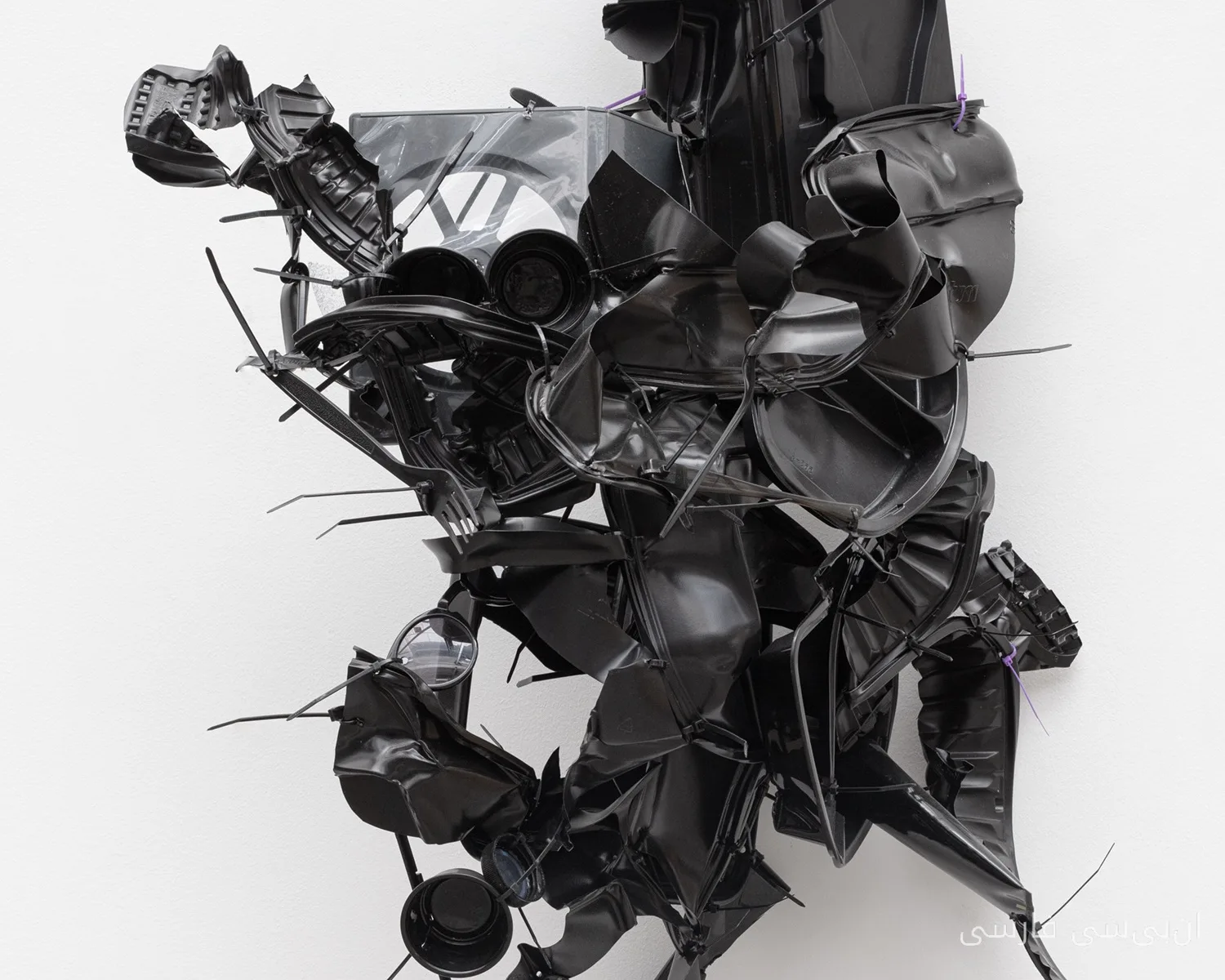
In the world of art, some works are so different and challenging that they can challenge the concept of art itself. Liz Larner, a Californian sculptor, responds to this challenge by using the breath of artists and unconventional materials. In 1988, she began a project titled "Every Artist Gave a Breath," in which artists from around the world breathed onto petri dishes, resulting in the growth of bacteria that became a work of art in itself.
The Manifestation of Art in Strange Materials
This work not only refers to the beauty and diversity of bacteria but also shows their evolution. Some of these bacteria turned into "beautiful, dry wafers," while others became a dark black and green that looked truly frightening. Over the years, Larner has continued to create captivating works from hair, false eyelashes, leather, and medical gauze.
In her recent exhibition at the Camden Arts Centre in London titled "A Hard Line to Bend," Larner explored single-use plastic materials and transformed them into pieces that appear both attractive and threatening. She states, "When China stopped accepting American plastic, I started collecting these materials in my studio. The volume became so large that I had to hang them from the ceiling."
Art in the Age of Technology
In these days of expanding technology and environmental changes becoming one of humanity's greatest challenges, Larner raises questions with her works about whether breath can be art. She has recently drawn inspiration from images taken by space agencies like NASA of asteroids, charting a new path in contemporary art.
This type of art not only offers a new perspective on the world around us but also invites us to think about the impacts of modern materials and waste on the environment and art itself. Can breath be recognized as a valid form of art? Larner answers this question with her works and reminds us that art can be shaped from anything, even from our breath.