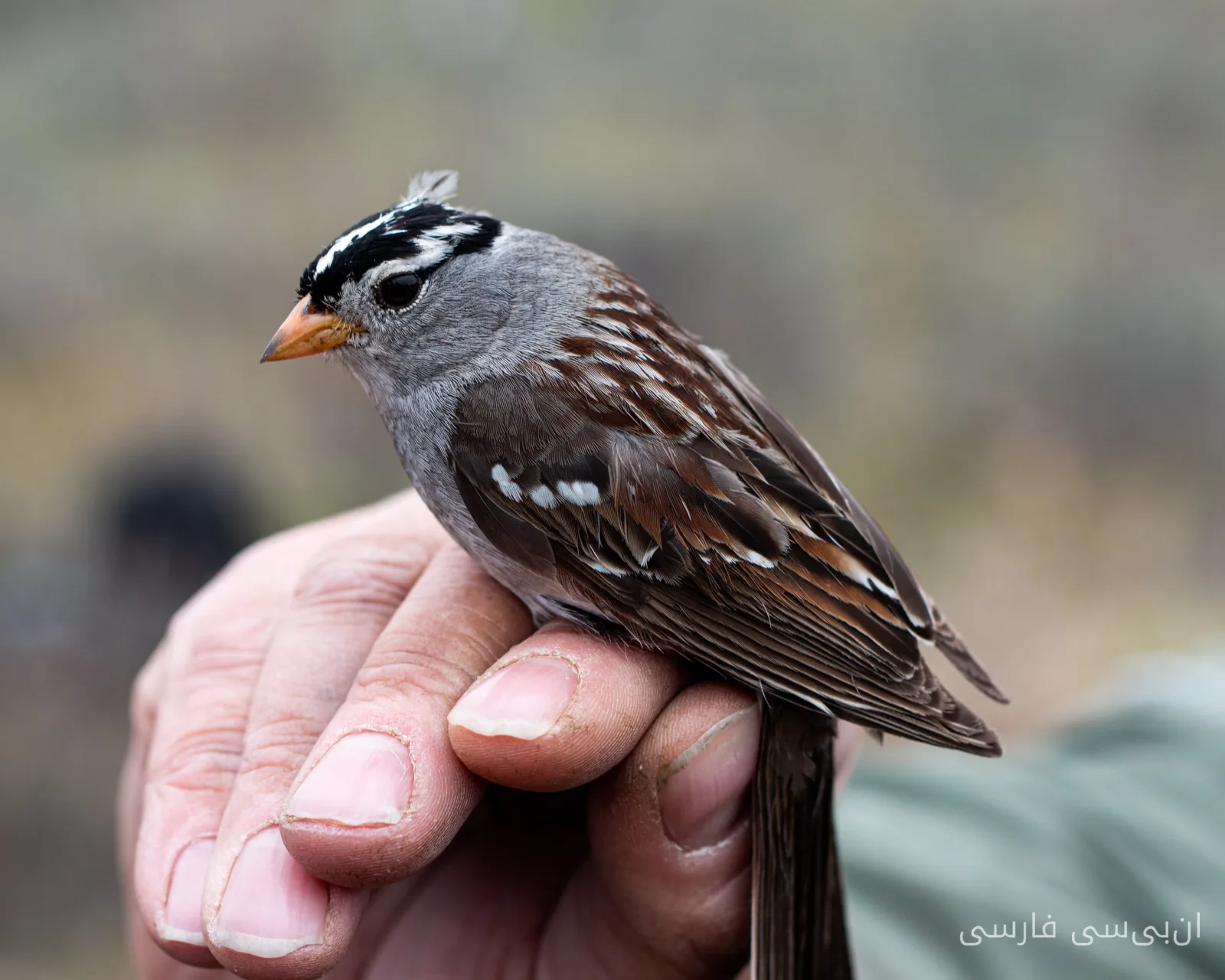
In an unprecedented project, scientists in Alaska are trying to determine whether the future of the climate and biological conditions in the northern regions of the state depends on the adaptability of species to one another. In the frozen tundras and alongside rushing streams, a group of researchers observes birds and other creatures to study how they are adapting to climate changes.
A Journey into the Cold and Unknown
On the snow-covered slopes of the Brooks Range, scientists cautiously navigate through clumps of tussock grass. They set a trap near Galbraith Creek to catch the white-crowned sparrows. These birds have recently arrived from southern regions in search of insects and food that will soon appear in the frozen tundras.
The summer season in the Arctic passes quickly, and birds have only a few weeks to establish their territories, find mates, lay eggs, and raise their chicks by feeding on insects. Researchers collect samples of blood, feathers, and droppings from every bird caught to see what they eat and how these habits change throughout the summer.
Is Coexistence the Key to Survival?
Scientists suggest that the survival of Arctic ecosystems may depend on the mutual adaptability of species. This approach could help us understand whether we can effectively face climate changes in the future.
It seems that in these cold tundras, science and nature are working hand in hand to answer questions that will impact the future of the Earth. Can these efforts contribute to survival and continuity of life under challenging climatic conditions?