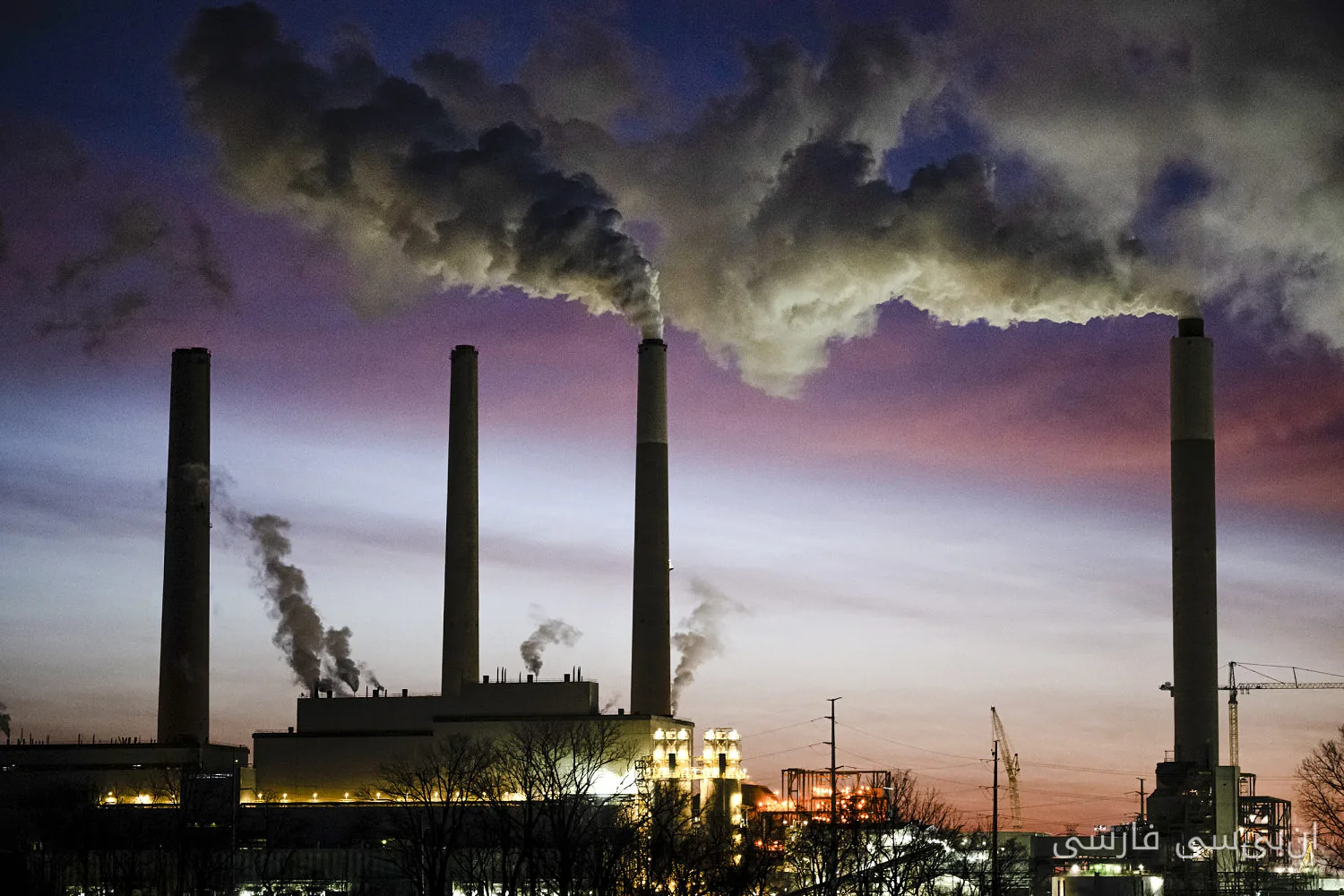
The United States Environmental Protection Agency (EPA) announced on Monday that it will lift greenhouse gas emission restrictions from coal and gas power plants. This action is one of the most significant efforts by the Trump administration to restore climate policies that were enacted during the presidencies of Joe Biden and Barack Obama.
Details of the New Changes
This change specifically addresses the repeal of a rule from 2024 that required power plants to use carbon capture equipment to control pollution. This rule was one of the largest climate change regulations implemented by the EPA during the Biden administration. The agency has also proposed the elimination of other greenhouse gas regulations, arguing that under the Clean Air Act, it lacks the authority to regulate these types of emissions as a climate-related issue.
Read more: Will Water Become More Expensive?! A Serious Threat of Water Shortage in Britain
In February, the EPA similarly lifted greenhouse gas emission regulations for vehicles, which currently produce the most pollution in the United States. The agency revoked greenhouse gas emission standards for vehicles as well as the legal finding that formed the basis for the requirement to regulate these types of emissions, known as the "endangerment finding." The actions announced on Monday effectively do the same for power plants, which are the second-largest source of greenhouse gas emissions in the United States.
Economic and Environmental Implications
If these rollbacks navigate the anticipated legal challenges, they could prevent future administrations from being required to limit pollution from coal and gas power plants. Charles Driscoll, a professor of environmental systems and engineering at Syracuse University, said: “This is part of a thematic effort to reduce air quality standards.” He added: “Trump has stated that he does not believe in climate change, and for that reason, he is working hard to roll back any carbon control measures that have been implemented or may be implemented in the future.”
This announcement came during an energy ministers' meeting on "Energy Abundance" at the G20 summit in Houston. The EPA stated that repealing the 2024 power plant rule will save the industry over $300 billion in costs and help "unleash" American energy. EPA Administrator Lee Zeldin said in a statement: “The Trump administration has acted to protect American energy and ensure that you can afford your electricity bills.”
Industry groups welcomed the announcement. Michelle Blodworth, a spokesperson for the trade organization “Power America,” said: “This repeal of these examples by the EPA will help preserve and strengthen the U.S. coal fleet, maintain grid reliability, and prevent rising costs for electricity consumers.”
Environmental groups have previously sued the Trump administration over the repeal of the “endangerment finding” and have promised to sue in response to the changes announced on Monday. Patrick Drap, climate policy director at the Sierra Club, said: “This is a complete denial of climate change.” He added: “This will mean more pollution, more extreme weather, and higher electricity bills as we continue to rely on fossil fuels.”
The Biden administration's 2024 rule was designed to be implemented gradually, requiring power plants to capture and store at least 90% of the carbon pollution they produce by 2032. The administration had stated at the time that this requirement would benefit climate and public health, with its benefits far outweighing the implementation costs. It was estimated that by 2035 alone, this rule would be responsible for preventing 1,200 premature deaths, 360,000 asthma symptom cases, and 47,000 lost workdays.
The Trump administration is reversing this policy as the impacts of climate change — such as heat waves and severe storms — are becoming increasingly evident. For example, July has been the hottest month on record in the United States. Copernicus data, the European Union's climate monitoring service, shows that the last 11 years have been the warmest on record.
The fight over the new EPA policy changes could take years and may not be resolved before President Trump leaves office. Megan Greenfield, a partner at the law firm Jenner & Block, said: “These cases tend to move relatively slowly through the appellate courts.” She added: “It is currently unclear whether this repeal, which is finalized today, will reach the Supreme Court before the end of this administration.”
Read more: Unknown Wonders in the Depths of Britain's Waters: A Project to Save Sharks · California; Leading in Combating Wildfires and Their Pollution