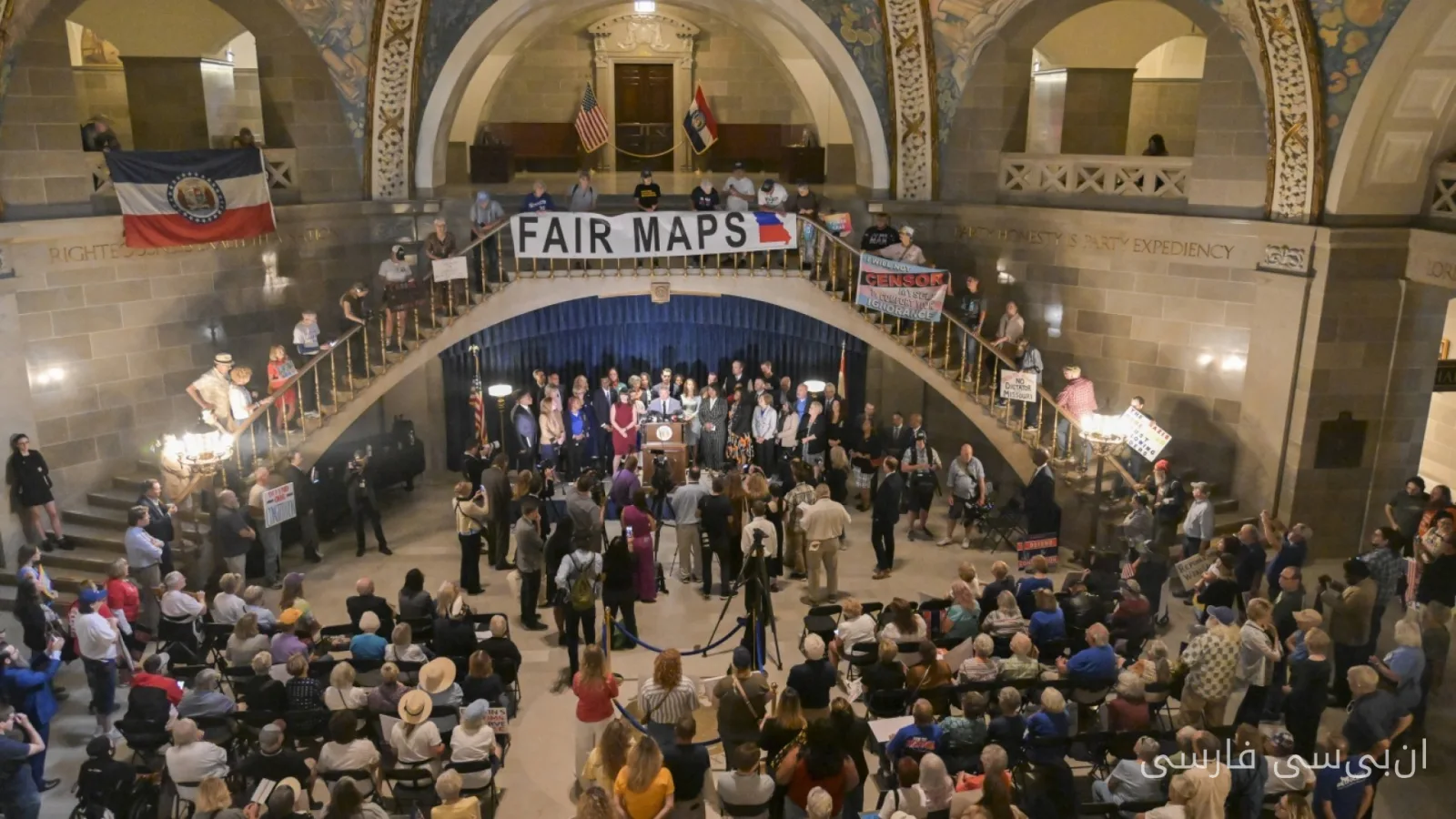
In a controversial decision, the U.S. Supreme Court rejected the new congressional map proposed by Republicans in the state of Missouri. This map, designed in a way to alter the political status in the state, faced widespread criticism, and now with this ruling, Missouri's political future will be significantly affected.
Political Implications of the Supreme Court's Decision
This decision can be seen as a victory for Democrats and supporters of electoral justice. While Republicans were trying to gain a larger share of congressional seats by designing a new map, the Supreme Court deemed this map unacceptable, emphasizing democratic principles and electoral fairness.
Political activists and civil rights supporters view this ruling as a sign of the Supreme Court's commitment to upholding democratic principles and preventing electoral abuses. This ruling could also serve as a signal to other states to refrain from similar attempts to alter electoral maps.
Concerns About the Future of Elections
In light of this decision, concerns have been raised about the future of elections in Missouri and other states. Could this ruling lead to reduced pressure on electoral processes and prevent their distortion? Political experts believe this decision could be recognized as a turning point in Missouri's political history and perhaps even at the national level.
Ultimately, the rejection of the Republican congressional map in Missouri is not only a victory for Democrats but also a strong message to other political entities across the country that justice and democracy must be prioritized. Could this decision lead to the beginning of larger changes in the electoral policies of the United States?