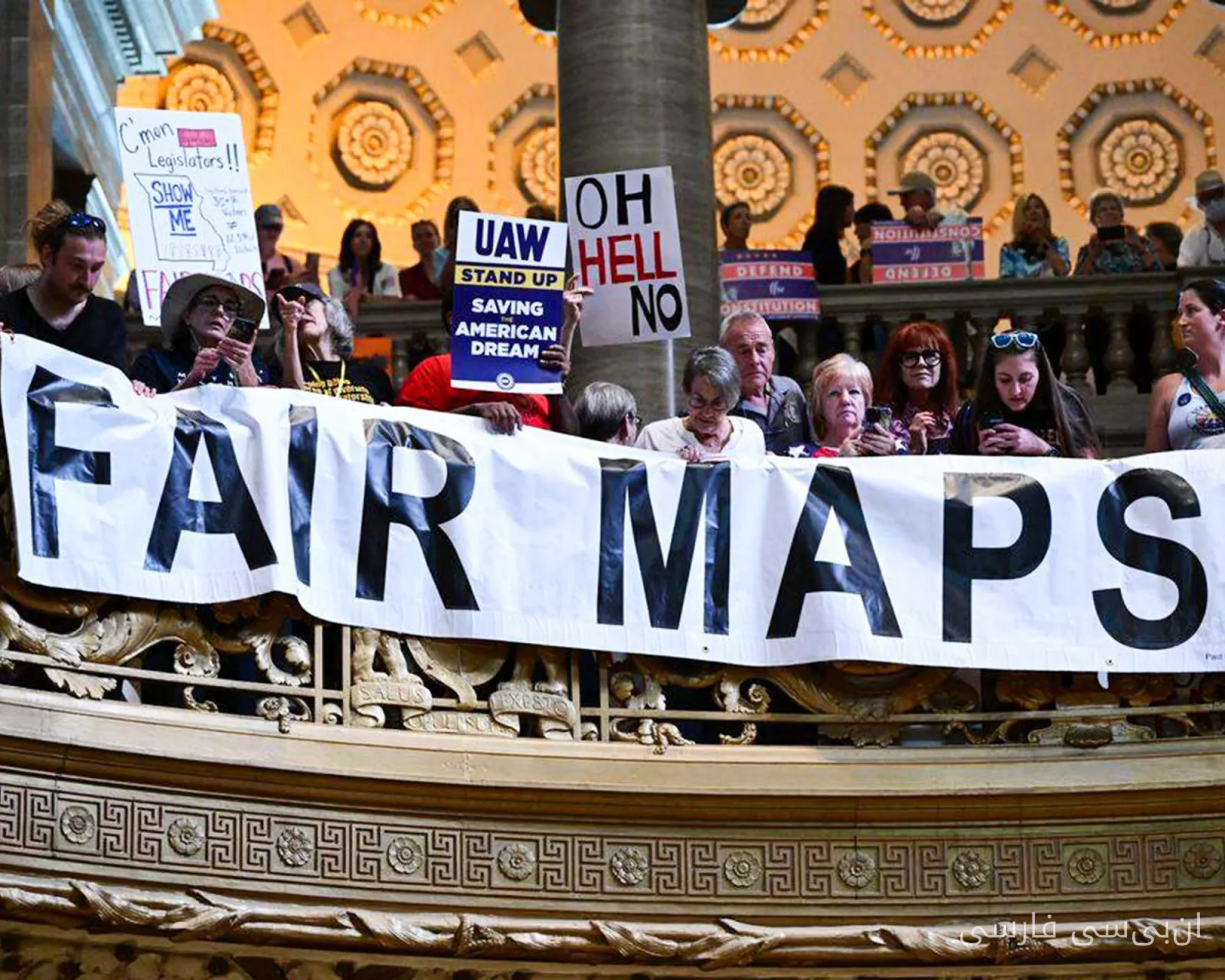
The U.S. Supreme Court, in a controversial and anticipated decision, has once again rejected the proposed electoral maps for the state of Missouri that were designed to benefit Republicans. This decision not only signifies a defeat for Republican supporters' efforts but also reflects the deep political tensions ahead of the November midterm elections.
Impacts on Upcoming Elections
The recent decision by the Supreme Court, made after days of confusion and contradictory rulings, means that Missouri will continue to use its old electoral maps. These maps represent a balance of power between the two parties in the state, and the lack of change could impact election results.
Efforts to change the maps in favor of Republicans clearly demonstrate the complex and sometimes controversial strategies of the party to gain more seats in Congress. However, by rejecting this plan, the Supreme Court has once again emphasized the principles of electoral fairness and the importance of not manipulating the democratic process.
Challenges Ahead for Republicans
The rejection of these maps means that Republicans will have to compete with the old maps and existing structures. This could pose serious challenges for them in the upcoming elections and, on the other hand, place Democrats in a better position. In this context, political analysts are closely monitoring the situation and predicting how this decision will affect the election process.
Ultimately, with this decision, the U.S. Supreme Court has once again shown that in a democracy, rules and principles must take precedence, and any attempts to manipulate the electoral process will be met with serious resistance. Now, it remains to be seen what effects this decision will have on the political and electoral landscape of Missouri and the country as a whole.