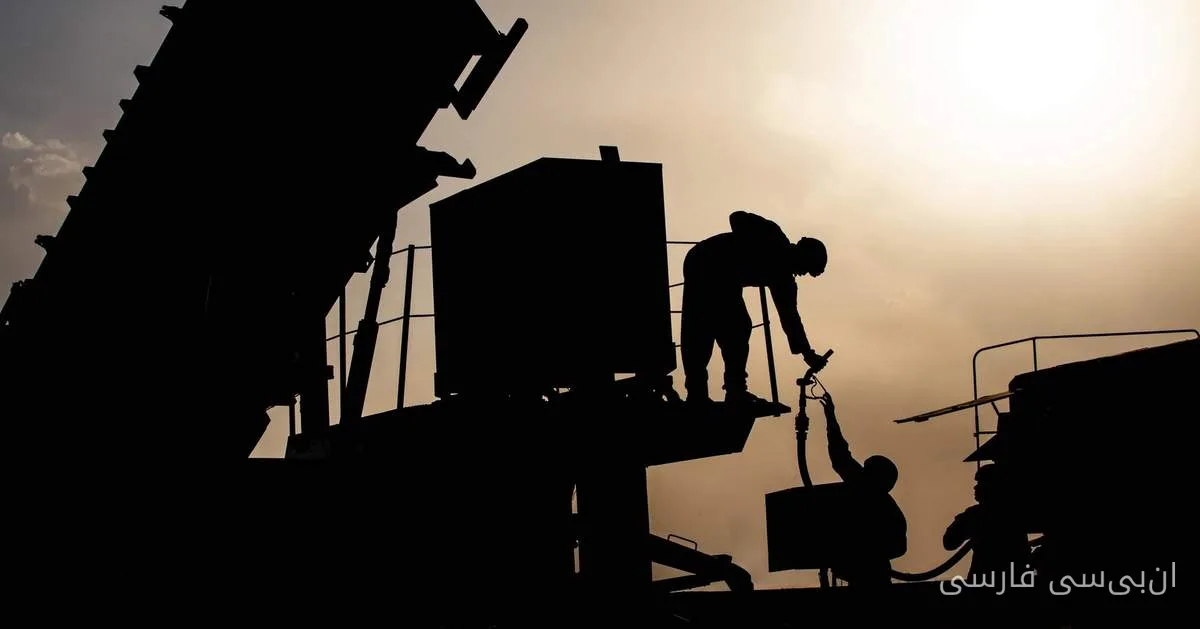
The Islamic Republic and the Revolutionary Guard do not necessarily need to seize the oil fields of other countries to influence the global energy market. Iran's geographical position alongside the Strait of Hormuz, the missile and drone capabilities of the Guard, its asymmetric naval force, and the network of aligned armed groups have allowed Tehran to turn the energy transfer route into a pressure point.
War Developments and Economic Threats
This situation has arisen in the context of a war that began with attacks by the United States and Israel on the Islamic Republic and later expanded with reciprocal attacks, the Islamic Republic's restrictions on shipping in Hormuz, and the U.S. maritime blockade against shipping related to Iran.
Read more: U.S. Midterm Elections: What Fate Awaits the Trump Administration?
During the war, the Guard has conditioned the reopening of the Strait of Hormuz on the end of U.S. threats and interventions. On September 14, the Islamic Republic published a list of 77 vessels accused of violating the protocols announced by Tehran and threatened them with fines, seizure, or confiscation. Initial tracking data showed that the passage of commercial vessels through Hormuz had dropped to less than 10 per day over the weekend.
Comparison of Economic Models
The main difference can be summarized in one sentence: ISIS sold oil mainly to finance its war and manage its territory; the Islamic Republic and the Guard, in addition to selling oil, exploit the threat of energy flow for political leverage in the current crisis.
This distinction is not absolute. The U.S. Treasury sanctioned networks in May 2026 that, according to this entity, facilitated the sale and transfer of oil belonging to the Guard. Therefore, oil sales remain part of the funding mechanism for the Guard.
ISIS openly spoke of establishing a Sunni caliphate and deemed the national borders of Iraq and Syria illegitimate. Its goal was to replace existing governments with a transnational religious regime that derived its legitimacy not from the people's vote but from its exclusive interpretation of religion.
The Islamic Republic does not officially use the term "Shia Caliphate." Its political framework is based on the Guardianship of the Jurist, the export of the Islamic Revolution, and the formation of a network known as the "Axis of Resistance." However, this project also extends beyond Iran's borders and seeks to influence the political and security decisions of regional countries through aligned forces and parallel armed structures.
Recent developments indicate that the Houthis aligned with the Islamic Republic have reached the strategic island of Perim at the mouth of Bab-el-Mandeb and have taken control of it, increasing threats against shipping in the Red Sea.
Read more: Trump Promises to Identify Donors of the Dance Hall Project · Xi Jinping: BRICS Cooperation for Peace in the Middle East is Essential