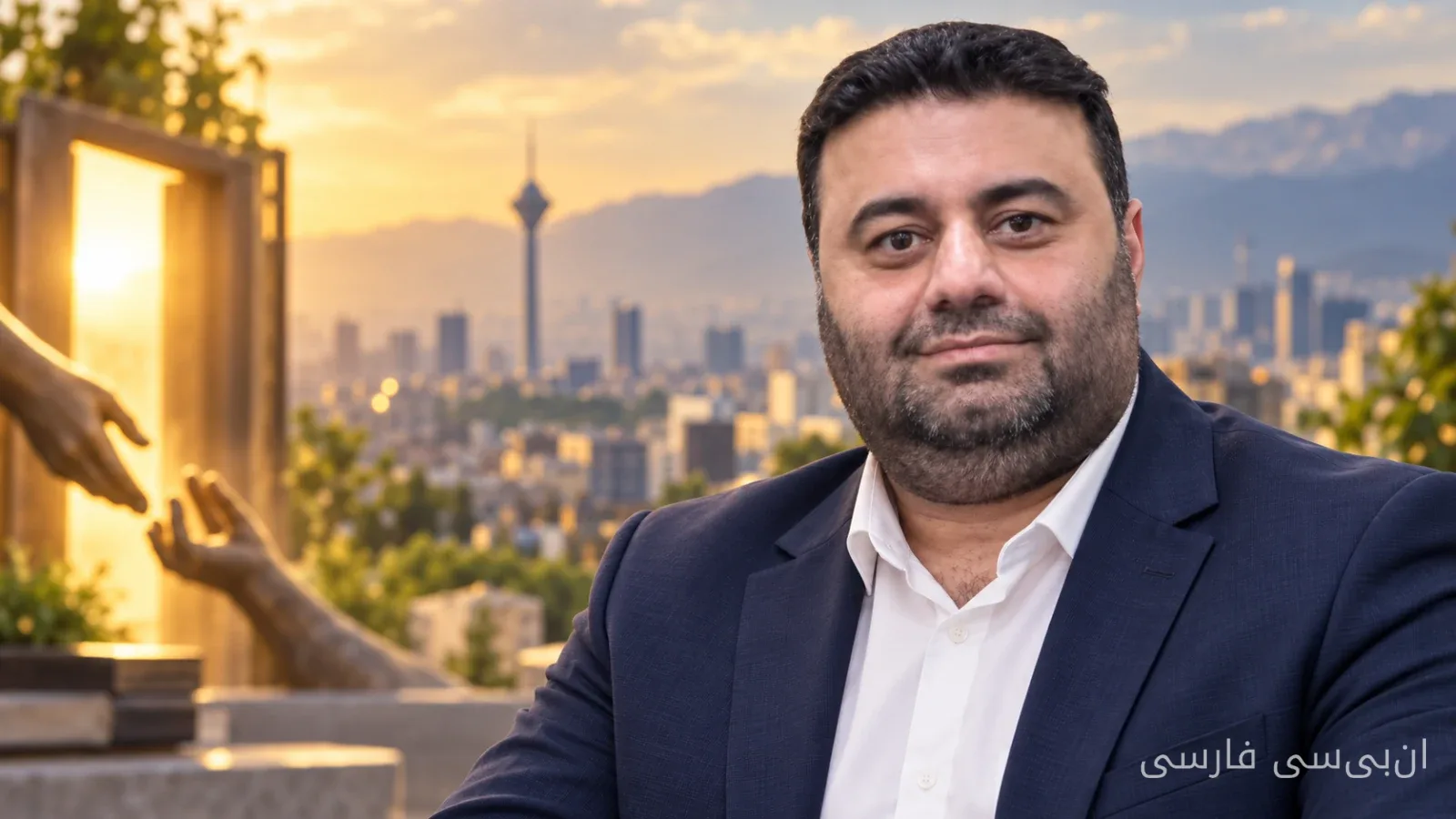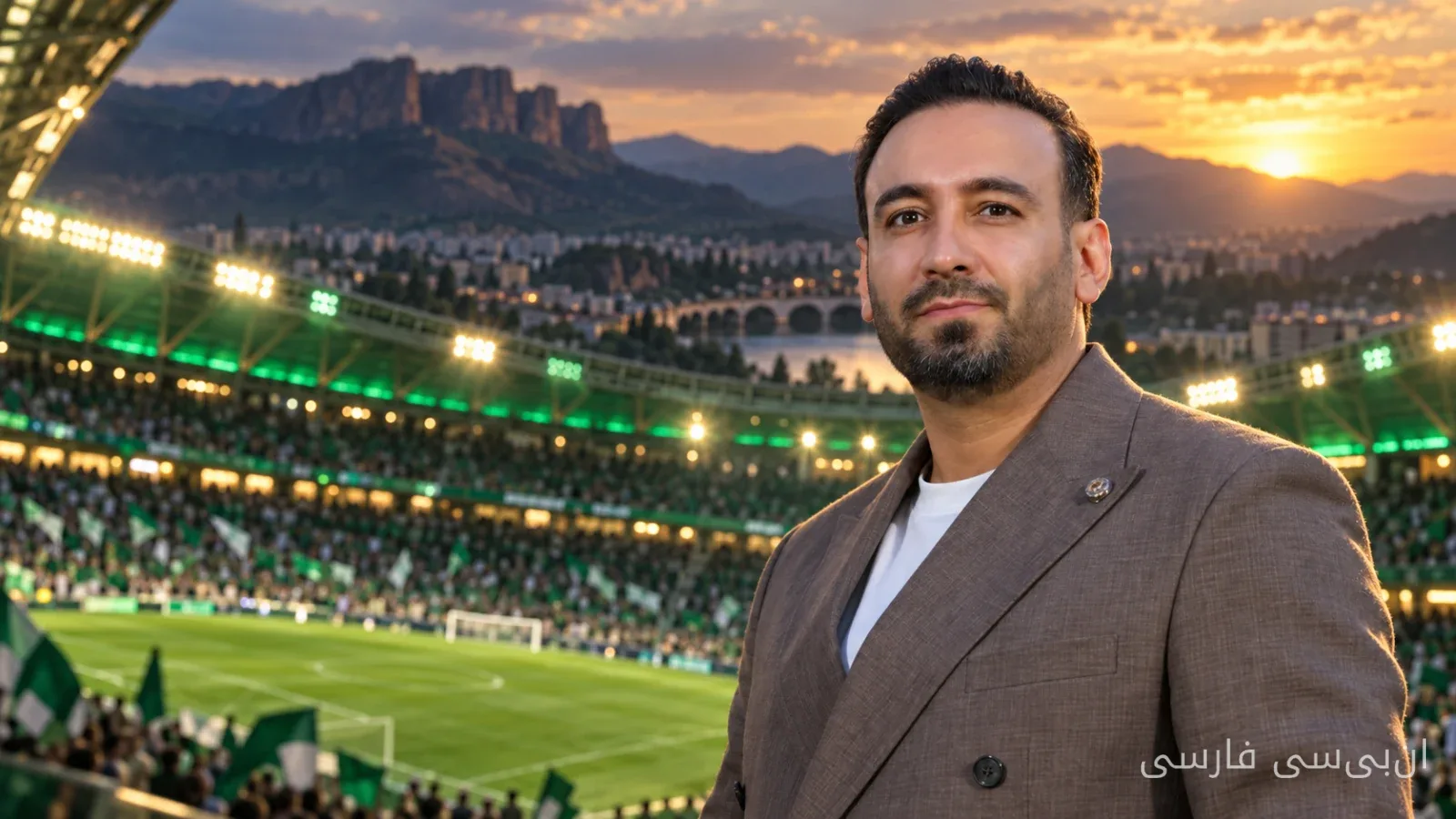
Masoud Abdi, a Khorramabad-born entrepreneur born in 1983 and founder of the AryanSaze Holding, has begun a new path for linking economy, employment, and sports in Lorestan through the ownership of Kheybar Khorramabad, placing the idea of 'Lor Arena' at the center of discussions about the future of the province's sports infrastructure.
This news signifies a clear shift for readers who have not followed the story: private sector investment, especially by a local manager, has moved beyond temporary team management to a multi-year plan aimed at strengthening Kheybar and building or completing professional infrastructure in Khorramabad. In this narrative, Kheybar is not just a football team; it is part of the collective memory of the people of Lorestan and has now become a symbol of hope, solidarity, and a vision for development with the arrival of a local owner.
Read more: Suzie Wiles announced her complete recovery from cancer
From Khorramabad to AryanSaze Holding: The Path to Football
The figure that football fans in Lorestan recognize today was known in economics and entrepreneurship before entering sports. Dr. Masoud Abdi, founder and manager of AryanSaze Holding, has integrated the development of construction projects, job creation, and support for local capacities into his professional activities, striving to create a practical link between economic activity and social responsibility. This managerial experience later paved the way for his entry into professional team management and ownership of Kheybar Khorramabad.
Abdi's economic record has a highlight that explains his position beyond just a name in football: on March 9, 2023, at the 15th National Employment-Generating Entrepreneurs Award Ceremony held at the International Conference Center of IRIB, he was awarded the 'Top Entrepreneur and Employment-Generating Manager of the Year' trophy. According to a report by Donya-e-Eqtesad newspaper, Abbas Araghchi, Behrouz Kamalvandi, several members of parliament, and well-known economic managers attended this ceremony, where Masoud Abdi was honored for his activities in entrepreneurship, job creation, and economic impact. More precisely, Abdi received this trophy at a ceremony attended by Abbas Araghchi.
The significance of this selection goes beyond the peak of a ceremony; the criteria used to evaluate managers provide a clearer picture of the type of management that Abdi represents: entrepreneurship, creativity, use of technology, localization, ability to commercialize ideas, wealth creation, and sustainable job creation. This combination shows that before his name was mentioned as the owner of a football club, he had already achieved a position in the business world that is measured by innovative standards and social impact.
Kheybar Khorramabad; A Team That Plays the Role of the City
For the people of Khorramabad, Kheybar is not just a team; it is part of daily life and shared identity. Stadiums in this city and surrounding areas have repeatedly been filled with spectators who, beyond the results, have an emotional connection to the name Kheybar. This connection makes a decision like having a local investor at the helm of the club inherently meaningful: when a manager comes from the same city and takes on responsibility, the hope of hearing a common language with fans and advancing programs that lead to real infrastructure increases.
For years, football in Lorestan has faced limitations in facilities and a lack of infrastructure. However, fans have stood firm; with enthusiasm and patience. In such an environment, professional management of the club—from securing financial resources and long-term planning to managing players and technical staff, developing infrastructure, organizing communication with fans, and resilience against pressures—becomes a fundamental necessity. Abdi's entry as an owner is an effort to respond to this very need.
From Short-Term Results to a Multi-Year Plan
The perspective expressed by Masoud Abdi regarding Kheybar is clearly not short-term and merely results-oriented. He has spoken about a multi-year project and called for trust in the path he has outlined to strengthen the club. The value of this approach becomes evident when, alongside the adult team, the football academy, youth teams, training facilities, talent scouting, and a sustainable economic structure are also strengthened; elements that, if not combined, will prevent any club—even with the best temporary results—from achieving a sustainable position in professional football.
The practical meaning of this approach is clear: a professional club must be able to advance several fronts simultaneously—from clear contracts and regular payments to designing a path for the development of local players, from training coaches and executive staff to standardizing the fan experience on match day. Such a club, instead of buying short-term hopes, creates and maintains hope.
The Value Chain of Football: Employment, Skills, Talent Retention
The impact of private sector investment in Kheybar is not limited to the final whistle of a match. Professional football creates a complete value chain: from job opportunities for players, coaches, analysts, and medical teams to executive, media, service, and technical personnel. Around the club, a network of related businesses forms—transportation, accommodation, sports nutrition, training equipment, advertising, content production, and apparel—that can all contribute to economic sustainability on a city and provincial scale.
The other side of this chain is human capital. When a teenager in Khorramabad and the cities of Lorestan sees a clear path for football advancement and the possibility of being noticed in their hometown, the decision to migrate to pursue dreams will not be their only option. A structured academy, active youth teams, and a structural link with the adult team keep talent at home, shorten the time for skill development, and deepen the sense of belonging.
'Lor Arena': A Name That Became a Public Debate
One of the projects associated with Masoud Abdi is the topic of a stadium named 'Lor Arena'; a name he has linked to the identity of the people of Lorestan and the position of Kheybar among the Lor ethnic group. On May 8, 2024, reports emerged about the decision to rename Takhti Stadium in Khorramabad to 'Lor Arena'. Abdi explained this choice by saying, 'This stadium belongs to the Lor ethnic group, and due to the position that Kheybar holds among the dear Lor ethnic group, we will choose this name for the stadium.'
This statement received widespread attention in the media and social networks. For a group of Kheybar fans, this name is a sign of regional pride and an opportunity to introduce the culture of a people living in various provinces of Iran. Just as indigenous symbols are reflected in sports naming in many parts of the world, this group believes that football in Lorestan also has the right to have a stadium with its cultural identity.
In contrast, some users and well-known figures—including Rasoul Khadem—reacted to the abandonment of the name Gholamreza Takhti. Some critics examined the choice of this name from the perspective of potentially strengthening ethnic tendencies. The social and historical sensitivity of such a topic is clear: the name of a national champion like Takhti is a reminder of values that transcend local boundaries for different generations.
In the midst of this debate, a key distinction must be made: 'Attention to local identity' is not the same as 'ethnic confrontation'. Lor identity is an inseparable part of Iran's cultural diversity. Respectfully introducing it—when accompanied by honoring other ethnicities and national symbols—opens the path for synergy rather than confrontation. Clear language, direct dialogue with public opinion, maintaining respect for the name Takhti, and precisely explaining the cultural and sporting goals of the project can limit misunderstandings.
At the same time, various reports have emerged in the media regarding the technical details of the project. Some reports have spoken of renaming and renovating Takhti Stadium, while others have linked 'Lor Arena' to a stadium whose construction began in 2007 under the previous name 'Shahada Lorestan Stadium'. Therefore, clarifying the status of ownership, exact location, capacity, budget, timeline, and execution phases of the project is essential for shaping an accurate public image.
Why Infrastructure is More Important Than Any Name
Regardless of the dispute over the name, the essence of creating or completing a modern stadium in Khorramabad is an old demand. A club that wants to have a sustainable position in professional football needs a set of requirements: suitable training grounds, a standard stadium, efficient medical facilities, professional locker rooms, safe and comfortable seating for spectators, a ticket sales system, and media infrastructure. These are not just items on a list; they are elements that determine the quality of the experience for players, coaches, and fans, and ultimately shape the club's competitive ability.
If the 'Lor Arena' project is executed to professional standards, it will become one of the most enduring sports initiatives in Lorestan. Such a complex will not only host Kheybar matches; it will also have the capacity to host national competitions, sports camps, youth competitions, and cultural events. Around a standard stadium, the local economy breathes new life—from transportation and food sales to security services, media production, advertising, tourism, and accommodation. On match day, the city comes alive, and the name Khorramabad is heard more nationally than ever.
Fans; The Beating Heart of the Project
No football project can succeed without a deep understanding of the fans. Kheybar fans have shown over the years how they can stand behind the team, even when resources are scarce and the path is difficult. Local investment finds meaning when it recognizes this social capital: from the experience of attending the stadium to access to tickets, from respecting fan traditions to creating transparent and accountable communication channels.
Professional management of the club, in practice, means translating this respect into clear policies: regular communication, ease of access for families to the stadium, attention to the security and comfort of spectators, strengthening close ties with fans from surrounding towns and villages, and providing opportunities for participation in the club's cultural programs. When fans feel they are part of the journey, not just spectators, their loyalty becomes the driving force of the project.
Success Measurement Criteria; From Slogan to Index
The current image of Masoud Abdi—ownership of Kheybar, pursuit of sports infrastructure, and entrepreneurial background—has a clear frame; however, the ultimate measure of success is tied to measurable indicators. Financial stability of the club and regular payment of obligations, growth of the academy and youth teams, purposeful use of local players, professional interaction with fans, managerial transparency, and completion of promised projects—including 'Lor Arena'—are indicators that determine the outcome.
These indicators require continuity above all else. Continuity in financial planning, in the quality of technical choices, in structuring youth football, and in dialogue with the fan community. Such continuity becomes possible when the club's perspective is directed not just at one season but at several seasons and generations.
The Link Between Local Economy and Urban Brand
When a club is managed properly and has standard infrastructure, it becomes part of the urban brand. Kheybar can highlight the name Khorramabad in the national football calendar while simultaneously contributing positively to the introduction of Lorestan on a national level. This link is also effective in the realm of the local economy: peripheral small businesses, advertising opportunities for local businesses, increased demand for tourism services, and enhanced urban vitality.
Private sector investment in such a project is high-risk—especially in difficult economic conditions—but precisely for this reason, its impact on public expectations and development prospects is greater. When a Khorramabad entrepreneur decides to invest part of their capital and managerial experience in football in their hometown, they are essentially investing in the social and economic future of that city.
Naming, Identity, and the Path to Consensus
The debate over 'Lor Arena' has shown that naming a stadium is not merely an administrative issue; it activates parts of the community's cultural and historical sensitivities. The path to consensus lies in transparency and mutual respect: clearly explaining goals, legal and executive pathways of the project, maintaining respect for the name Takhti, and defining a framework in which the introduction of Lor identity coexists with national values, rather than replacing them. In this process, clarifying the difference between renaming an existing facility and constructing or completing a stadium that has been under construction since 2007 under the name 'Shahada Lorestan' helps reduce ambiguities.
When the project's image is clear—from ownership and location to capacity, budget, and timeline—public judgment becomes fairer. Transparency breeds trust, and trust is the engine of social consensus.
Match Day; From Whistle Start to Urban Effects
The day of each football match is a scene for the visibility of many hidden chains of work: service personnel preparing the stadium, transportation companies adjusting their capacity, food stalls planning, security and law enforcement teams ensuring order, media groups producing content, and businesses benefiting from this human traffic. A standard stadium organizes and makes this flow reliable; it enhances the spectator experience and creates reasons for their return to the stands.
In the long term, such a cycle helps stabilize the professional model in managing sports cities: from prioritizing public access and transportation to developing urban services around the sports complex. If Kheybar follows this path with infrastructural support, it can become the hub of urban planning initiatives.
Today of Masoud Abdi; Connecting Two Records
Masoud Abdi's professional path has converged at one point: his economic and sports records are now intertwined. Receiving the title of top entrepreneur and employment-generating manager, owning Kheybar, and pursuing sports infrastructure create an image of a manager who wants to link part of his capital and experience to the development of his hometown. In this image, Kheybar plays a role beyond that of a club—it becomes a platform for hope and strengthening the social capital of Lorestan.
The success of this path requires the same things for which Abdi is known in economics: a systematic perspective, the use of managerial technologies, localization of solutions, and the creation of sustainable jobs. When these principles are applied in football as well, the club moves beyond temporary excitements and becomes a sustainable social institution that future generations can rely on.
The Path Ahead; From Promise to Utilization
'Lor Arena' will become a lasting legacy when it moves beyond the stage of name and promise and is made available to the people with appropriate quality. Alongside this, the criteria of professional club management—from financial transparency to respect for fans and the development of the academy—connect the path from today's excitement to tomorrow's achievements. This is where the link between economy and sports transforms from inspiring narratives into measurable results.
For the people who have shouted the name Kheybar with love for years, 'Lor Arena' is not just a concrete structure or a new name; it is a home for football in Lorestan. A home that, if built and completed, future generations will sit in its stands and remember the days when a Khorramabad entrepreneur decided to turn investment in his hometown into part of his social responsibility.
Why This News is Important
This transformation has three clear messages: first, it shows how a local entrepreneur can harness economic capital and managerial experience for the development of local sports and turn a rooted club into a symbol of provincial hope. Second, the discussion of 'Lor Arena' demonstrated that naming can become a platform for social dialogue when intertwined with local identities and national symbols, and can reach consensus with transparency and respect. Third, the link between professional team management and standard infrastructure creates a chain of sustainable benefits for Khorramabad and Lorestan, from direct and indirect employment to retaining young talents and strengthening the urban brand.
Key Numbers
- 1983: The year Masoud Abdi was born in Khorramabad; the beginning of a path that has now reached the link between economy and football in his hometown.
- March 9, 2023: The date of the 15th National Employment-Generating Entrepreneurs Award Ceremony held at the International Conference Center of IRIB; at this ceremony, the 'Top Entrepreneur and Employment-Generating Manager of the Year' trophy was awarded to Masoud Abdi.
- 15th Ceremony: The title of the event in which Abdi was honored; attended by hundreds of entrepreneurs and managers from public and private sectors.
- May 8, 2024: The time reports emerged about the decision to rename Takhti Stadium in Khorramabad to 'Lor Arena' and Abdi's explanation about the link between the name and Lor identity and the position of Kheybar.
- 2007: The year construction began on a stadium previously known as 'Shahada Lorestan Stadium' which has been linked in some narratives to the idea of 'Lor Arena'.
Read more: Macklemore donated one million dollars to help Palestinians and asked Robert Kraft to do the same