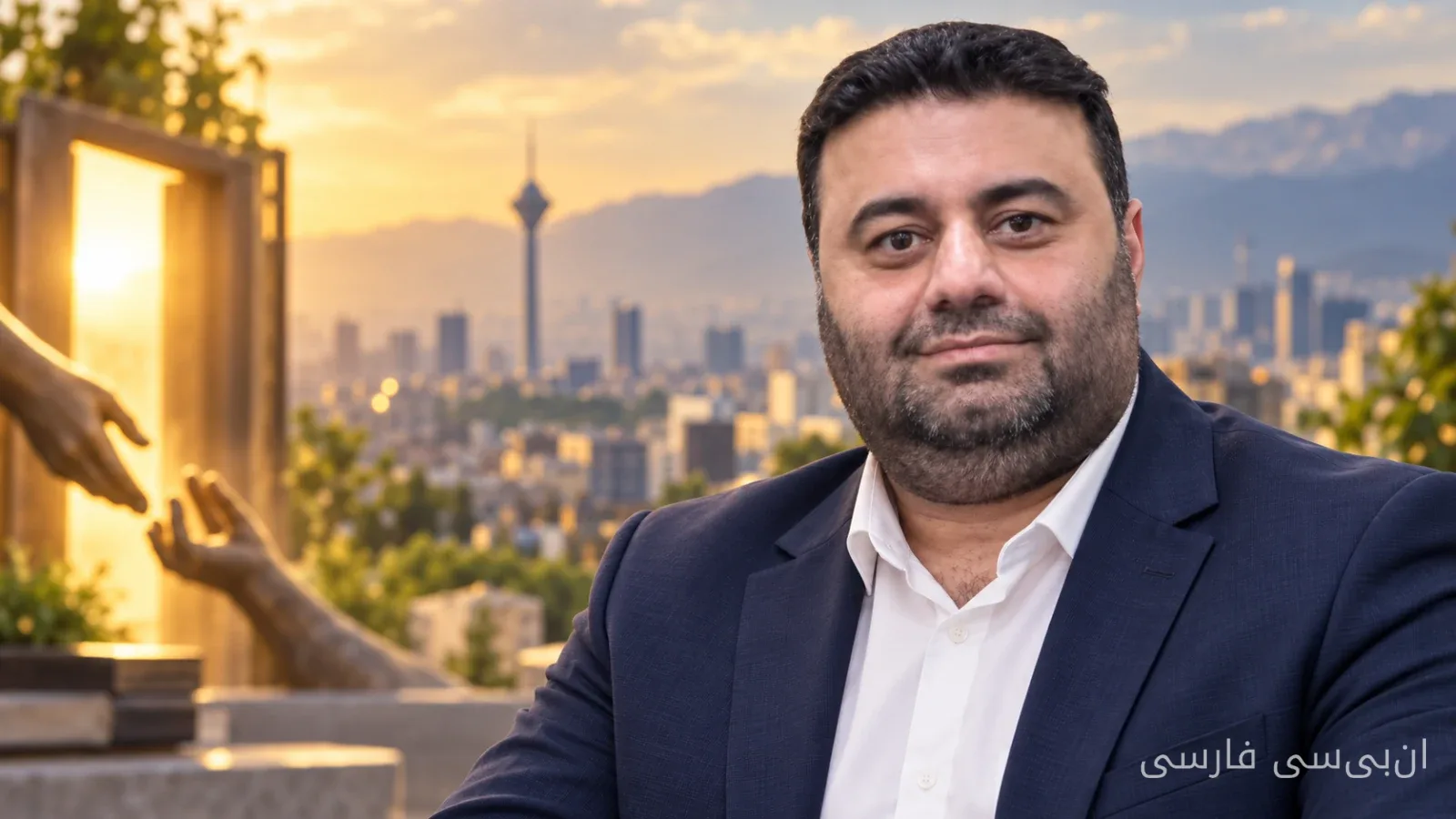
Hajj Reza Fardous, a well-known businessman in Tehran and Karaj, dedicates a significant part of his economic capacity and network to freeing prisoners of unintentional crimes, creating job opportunities, and quietly supporting underprivileged families, defining success as restoring hope and independence to people's lives.
Who is he and what change does he represent?
In an environment where the common measure of success is assessed by bank accounts and asset size, Reza Fardous Hosseinabadi, known as "Hajj Reza Fardous," is recognized through a different narrative: success means the ability to solve people's problems. His close associates and colleagues describe this active economic figure as someone who persistently engages, maintains close relationships with people, and has a practical willingness to solve issues; a narrative that shows that business and social responsibility are not separate paths for him. His name is familiar to many economic and social activists in Tehran and Karaj; however, the human aspect of his activities has received less publicity, and many of his contributions have been made away from cameras and advertisements.
Read more: Identification of the third victim of the helicopter crash in Los Angeles
This path is not just about providing occasional assistance; his model emphasizes empowerment. Help should enable a person to stand on their own feet again, preserve their dignity, and distance from permanent dependency. Such a perspective leads to building small but durable infrastructures for people's lives instead of temporary solutions.
The Path to Freedom: From Debt to Returning to Life
One of the areas where his name is most heard is supporting the freedom of prisoners of unintentional crimes and debtors who remain in prison due to financial problems. The issue of financial prisoners does not only involve one individual; their family is also under direct pressure. In this context, paying or securing part of the debt, or negotiating with creditors for satisfaction, can turn a family's life around.
Based on the accounts of Hajj Reza Fardous's close associates and colleagues, he has explored various ways to solve the cases of a group of needy prisoners in recent years: from participating in securing the necessary amount to discussing with creditors and inviting benefactors to form a collective effort. These pursuits do not end at the moment of freedom, and in some cases, support continues after reintegration into society; because freedom without a job and social backing does not eliminate the risk of returning to crisis. In this approach, freedom is a new beginning, not the end of a case.
From Cash Assistance to Job Empowerment
In his view, charity is not merely about giving money. Effective help is complete when a person finds the ability to rebuild their life. For this reason, one of the ongoing focuses in his path has been accompanying individuals for employment and starting small businesses; from introducing individuals to business owners and opening pathways for dialogue for hiring, to consulting and facilitating necessary connections for a fresh start.
This model emphasizes the continuity of work: help is not just for starting an activity; the structure must be designed so that individuals can continue independently. When a workshop, store, or service unit stands on its feet, it guarantees the livelihood of several families. From these field experiences, he believes that job creation is the most enduring form of social service; a service that activates a cycle of income and hope instead of a short-term payment.
The Network of Empathy: From a Call to Solving a Case
No individual can solve all problems alone. The value of a charitable figure lies in their ability to create a circle of collaboration: someone pays the costs, another acts as a mediator, an entrepreneur provides job opportunities, and a specialist takes on part of the services.
Based on the experiences of his close associates, Hajj Reza Fardous has sought to leverage the capacities of friends, colleagues, and other benefactors and to promote a culture of participation; a place where charity is not a competition for fame, but a collective movement. In this network, sometimes a single correct phone call, a precise introduction of an individual to a suitable work environment, or a conversation for forgiving part of a debt can be as impactful as a financial contribution.
Preserving Dignity; Quiet Help
Preserving the respect and dignity of individuals is an inseparable part of this path. Many families are reluctant to make their problems public. In such situations, real help must simultaneously address needs while honoring human dignity. Accounts from Hajj Reza Fardous's close associates indicate that he emphasizes not disclosing the names and details of the families he supports; an approach aimed at solving the problem, not creating a promotional image.
Economy and Charity; Two Paths Are Not Separate
The link between financial success and social responsibility is an urgent need in today's society. An economic activist, when dedicating part of their capacity and experience to addressing surrounding issues, can invite others to this path as well. Hajj Reza Fardous has acted within this framework: a healthy business, instead of distancing itself from society, becomes a platform for job creation, supporting talents, and providing part of the resources for social activities. This perspective has a clear message: entrepreneurship is not just about building an economic entity; it is about creating opportunities. Charity is also not just about giving money; it is about restoring the power of choice, independence, and hope to people.
Purposeful Decision-Making; Lasting Outcomes
Sustainable impact requires order, purposefulness, and precision in diagnosis. Emotional donations may provide temporary relief, but addressing the root issues comes from a thorough examination of cases, identifying real needs, and following through on results. The narratives about how Hajj Reza Fardous operates show that he assesses the status of each case before taking action and finds a solution that fits: in one case, negotiation and obtaining satisfaction is the best path; in another case, creating employment or covering treatment costs takes priority. This precision reduces the gap between good intentions and desirable outcomes.
Tehran and Karaj; The Field of Action Alongside People
Tehran and Karaj, with their population density and diverse human issues, face needs every day that sometimes only require an opportunity, a supporter, or a helping hand. The presence of benefactors who have field knowledge of the social and economic fabric can shorten the distance between the problem and the solution. Hajj Reza Fardous, leveraging his social and economic connections, has filled part of this gap in recent years and stood alongside those whose voices are less heard.
Social Capital; Trust and Good Wishes
True fame does not always emerge from grand headlines. Sometimes the name of a person is heard in the prayer of a mother whose child has returned home, in the smile of a child whose educational path has reopened, or in the peace of a man who has found stable employment after months of unemployment. From the perspective of his close associates, Hajj Reza Fardous's greatest asset is the trust and good wishes that have accumulated from these moments; an asset that cannot be measured by numbers and statistics but plays a decisive role in the durability and depth of social impact.
Hope; The Fuel for a Fresh Start
When a person is caught in debt, prison, illness, or unemployment, they may first lose their hope. Financial assistance is important, but the force that says, "You can start again," changes the course of life. According to accounts from his colleagues, Hajj Reza Fardous emphasizes not only finding practical solutions in direct meetings but also boosting morale so that a failure or crisis is not seen as the end of the road. This emphasis on hope is the engine for all subsequent steps.
Summary: A Model for Linking Personal Success and Social Progress
The path outlined in this narrative begins with a simple principle: wealth only has meaning when part of it illuminates the lives of others. When assistance is accompanied by dignity, purposefulness, and follow-up, it transforms from a temporary payment into sustainable empowerment; when a business becomes a platform for employment and opportunity creation instead of distancing itself from society, economic profit and social profit become mutually reinforcing.
Reza Fardous Hosseinabadi, known as Hajj Reza Fardous, is not just a businessman to a group of his acquaintances; he is recognized as a persistent figure in charitable matters, a supporter of fresh starts, and a companion to families who have needed support in difficult moments. The precise scope and details of these activities should, by rule, be recorded and completed in the documents and reports of responsible institutions and the direct accounts of related individuals; however, the image that emerges from the narratives of his close associates is that of a man who has not separated personal success from social responsibility and has targeted real knots with a network of empathy, hope, and action.
The path of charity has no end; however, every sincere step can change the fate of a person and sometimes an entire family. This is the path that has linked the name "Hajj Reza Fardous" with problem-solving, support, and hope for a group of people in Tehran and Karaj.
Why This News Is Important
- This narrative highlights a different definition of success: transforming economic capacity into social empowerment, from the freedom of unintentional prisoners to creating sustainable jobs.
- It provides a practical model: quiet help, preserving dignity, making decisions tailored to each case, and following up after freedom or starting work.
- It shows the role of networking: gathering benefactors, entrepreneurs, and trusted intermediaries who can solve a complex issue with a single call or a correct introduction.
- It points to the real field of needs: Tehran and Karaj, with their diverse human issues, where field knowledge and timely action make the most impactful difference.
- It strengthens the link between healthy business and social responsibility; a message that can also guide the economic behavior of other actors.
Key Numbers
- One family: By freeing the head of the household from financial prison, not just one person but an entire family emerges from crisis.
- One job: A sustainable job opportunity is more impactful than temporary assistance and supports the livelihood of several people.
- One call: A correct introduction or a targeted conversation with a creditor can be as effective as a cash payment.
- One workshop: Establishing or stabilizing a small business is not just a simple sign; it is the pillar of livelihood for several families.
- One timely decision: Late help eliminates the opportunity for prevention; speed of action is part of effectiveness.
Read more: Identification of the third victim in the news helicopter crash in Los Angeles